Human Resources & Industrial Relations Class Profile
Explore the important demographic information and admission statistics below to help you determine if the Master of Human Resources & Industrial Relations program could be the right fit for you.
Full-Time Class of 2025 Profile
- 42% international students
- 37% men
- 63% women
- 30% students of color
Although there are no absolute qualifications for admission to the MHRIR program, most admitted students have strong undergraduate records (3.0+ on a 4.0 scale) and score at the 40th percentile or better on the verbal and quantitative sections of the GRE or GMAT. Work experience is not required but is encouraged.
- 3.62 average undergraduate GPA
- 2.5 average full-time work experience
Undergraduate Majors
We do not require any specific undergraduate major. Admitted students have degrees in fields ranging from engineering to the fine arts. Common majors include psychology, business, economics, human resources, and communications.
Meet our students
In our HRIR program, students study together in tight-knit groups during their time in graduate school. Each cohort is unique and bonds are created that last a lifetime. We invite you to meet our students.
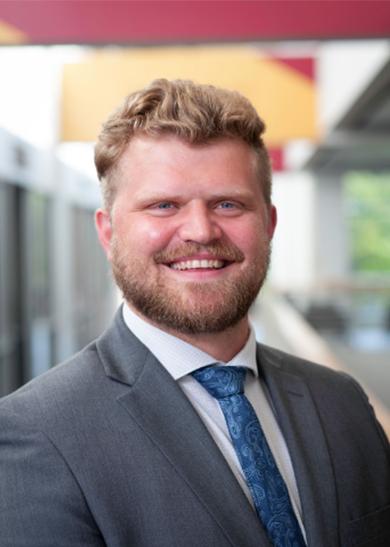
Andrew Moritko
Why did you choose the MHRIR program at UMN?
After several years of working in a full time role, I decided to return to education to deepen my expertise across the board and stay ahead in a rapidly evolving industry. The incredible coaching and advising support from the Graduate Business Career Center, extensive worldwide alumni network, committed faculty and excellent outcomes for students were just a few of the reasons I chose this program. I am a lifelong learner, and returning to a world class institution allowed me the opportunity to explore advanced concepts that I was unable to do while balancing the demands of a full time job. I believed the combination of my experience along with the opportunities from this program would allow better opportunities for career advancement and greater overall contributions in the field of Human Resources and beyond.
What has been the most rewarding experience in the program?
For me, the most valuable aspect of my learning experience has been the opportunity to learn not only from my courses but also from the diverse cohort I'm a part of. Inside and outside the classroom, my journey has been truly rewarding. Our cohort comprises individuals from various backgrounds and experiences, offering me real-world examples and multiple perspectives. Witnessing how they interpret and respond to various situations has accelerated my personal growth and broadened my understanding, especially as I prepare for the next step in my career. Additionally, sharing in the successes of my cohort peers and navigating challenging times together with them has been immensely rewarding and something I hold in high regard.
What advice would you give a prospective student?
Assess your experiences and be able to speak to who you are and how you've grown throughout your life to this point, you know yourself better than anyone and you can be your greatest advocate. Also, it is also important to conduct your own thorough research on the program, be skeptical, and compare the outcomes of graduates to other programs that you're interested in. What sets Carlson School of Management and the MHRIR program apart is our willingness to engage with you, answer your questions, and offer insights into the experience. We are always here to help you by answering questions and giving you honest opinions.
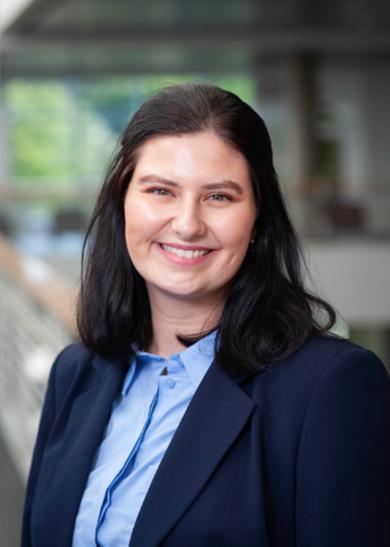
Annelies Kraayeveld
Why did you choose the MHRIR program at UMN?
I chose UMN’s MHRIR program because of their academic excellence, national reputation, and strong company relationships. UMN’s MHRIR program is well-known across the country since we have so many alumni in so many different organizations.
What is something you are excited about during your time in the program?
My case competition team was recently selected to represent UMN in Ohio in February. I think that case competitions are a great way to gain experience with problem solving and applying classroom concepts to a real situation. I’m incredibly excited to tackle this challenge with my team (and go to Ohio!).
What advice would you give a prospective student?
It can be nerve-racking starting a new graduate program, especially if you’re moving cities like I did. I would suggest getting to know your classmates as much as possible. When you’re going through on-campus recruiting or midterms, it’s important to remember that the rest of your cohort is experiencing the same things.
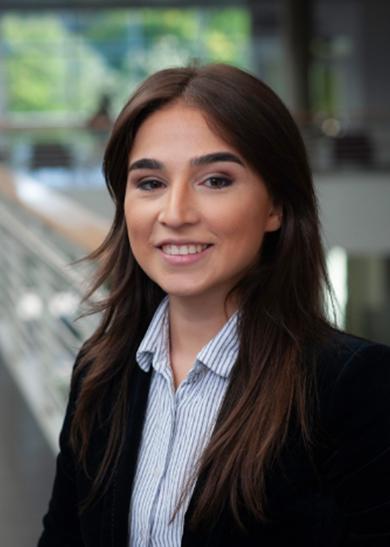
Zeynab Rzayeva
Why did you choose the MHRIR program at UMN?
The MHRIR program aligns perfectly with my interests and values. It offers one of the most compatible curricula, a dedicated faculty, and excellent coaching and career support. Moreover, the HRIR program significantly emphasizes a student-centric approach, which I find invaluable.
What is something you are excited about during your time in the program?
There are so many aspects that excite me about my time in the program. First and foremost, it is great to be engaged in deep learning from highly professional professors, fostering discussions and asking questions. I'm also enjoying the process of building new and hopefully lifelong friendships with my classmates. Participating in group projects and interacting with some of the brightest peers is particularly exciting. Furthermore, I'm thrilled to delve into the depth of American culture, customs, and traditions, gaining an insider's perspective that allows me to break down stereotypes and develop a fresh outlook on various aspects of life in the US.
What advice would you give a prospective student?
I journeyed from beautiful Azerbaijan to pursue my education in the USA. It was a journey filled with challenges and obstacles, but one thing I can say for sure is that it was absolutely worth it!
So, dear prospective students, don't hesitate, just go for it! Especially for international students, it might seem daunting, but please believe in yourself because you can do it. The mere fact that you're contemplating something great already sets you apart from many of your peers, making you exceptional. The rest is just technicalities. Those who have gone through the same experience are here to support you. Please don't hesitate to reach out to chat with us. Even if you're not sure what to ask, just reach out to me or many other current students and alumni and say, "Hey, I want to study at HRIR at UMN, please tell me about it." We're here to help!